A successful portfolio should immediately communicate who you are, what you do, what you have created, and why a potential client should work with you. Instead of overwhelming visitors with unnecessary animations or complicated layouts, modern portfolio websites focus on clarity, personality, usability, and meaningful content.
Clean & Minimal Visual Design
Minimalism continues to be one of the strongest trends in modern web design. Clean typography, balanced spacing, strong visual hierarchy, and carefully selected colors help visitors focus on the most important information.
A well-designed portfolio does not need excessive elements to look impressive. Every section should have a clear purpose—from the hero section and project showcase to the about section, testimonials, services, and contact area.
Modern layouts also make better use of whitespace. This creates a premium appearance while making the website easier to scan across desktop, tablet, and mobile devices.
Strong Hero Sections
A strong headline can communicate your specialty in just a few words, followed by a concise introduction and a clear call-to-action such as
View My Work
Explore Projects
Hire Me
Let’s Work Together
Subscribe To Our Newsletter
Creative Project Showcases
Your projects are the heart of your portfolio. In 2026, simply displaying screenshots is not always enough. Modern portfolio websites use project presentations to tell a story.
Each project can highlight:
✓ The project overview
✓ Client or business goals
✓ Design and development approach
✓ Key features
✓ Technologies or tools used
✓ Challenges and solutions
✓ Final result
✓ Relevant screenshots or mockups
A well-structured case study helps potential clients understand not only what you designed, but also how you think and solve problems.
Conversion-Focused User Experience
A portfolio should look great, but it should also generate opportunities. Conversion-focused design makes it easier for visitors to take the next step.
Clear calls-to-action should appear naturally throughout the website. Visitors should never have to search for your contact information or wonder how to start a project with you.
Strategically placed buttons, contact forms, project inquiry sections, testimonials, and service information can guide visitors from simply browsing your work to becoming potential clients.
Typography That Builds Personality
Typography plays an important role in creating a distinctive portfolio identity. Modern websites are using bold headlines, refined font combinations, large display text, and carefully controlled font sizes to create visual hierarchy.
The goal is not to use complicated typography but to choose fonts that match your personal brand while maintaining excellent readability.
A strong typographic system can make even a simple layout feel sophisticated and professional.
Responsive & Mobile-First Design
A portfolio must look professional on every screen size. With many users browsing websites from smartphones, responsive design is no longer optional.
Modern portfolio websites should provide:
✓ Fast-loading mobile pages
✓ Responsive typography
✓ Touch-friendly buttons
✓ Flexible image layouts
✓ Easy navigation
✓ Proper spacing on smaller screens
✓ Optimized media and animations
A great desktop design can lose its impact if the mobile experience is poorly optimized.

SEO-Friendly Portfolio Structure
A beautiful portfolio should also be discoverable. Search engine optimization should be considered during the design and development process.
Well-structured headings, descriptive page titles, optimized images, meaningful alt text, clean URLs, internal linking, useful project descriptions, and high-quality content can help search engines understand your website.
Each project can also have its own optimized page, allowing your portfolio to target relevant searches related to your services and expertise.
Performance Matters
The Future of Portfolio Design
Final Thoughts
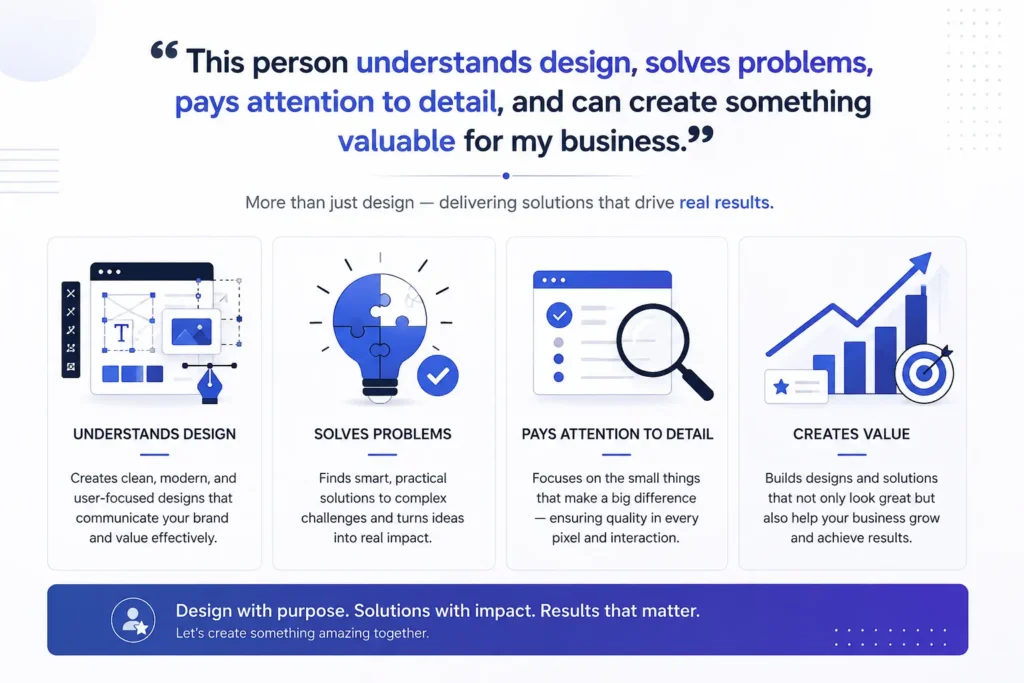
A successful portfolio website in 2026 should be clean, creative, fast, responsive, personal, and purposeful. Great design attracts attention, but great user experience keeps visitors engaged—and clear calls-to-action turn that attention into real opportunities.
The best portfolio is not necessarily the one with the most animations or the most complicated visual effects. It is the one that communicates your expertise clearly, showcases your strongest work effectively, builds trust, and makes it easy for the right people to contact you.
If you are redesigning your portfolio in 2026, focus on creating a website that reflects your personality while delivering a professional and effortless experience for every visitor.
Clean design. Creative thinking. Powerful presentation. Better conversions.
That is the direction of modern portfolio website design in 2026.